3 Free Body Diagrams
Recall the following table taken from the Hibbeler Statics textbook. It summarizes the constraint resultant forces and moments due to various types of supports.
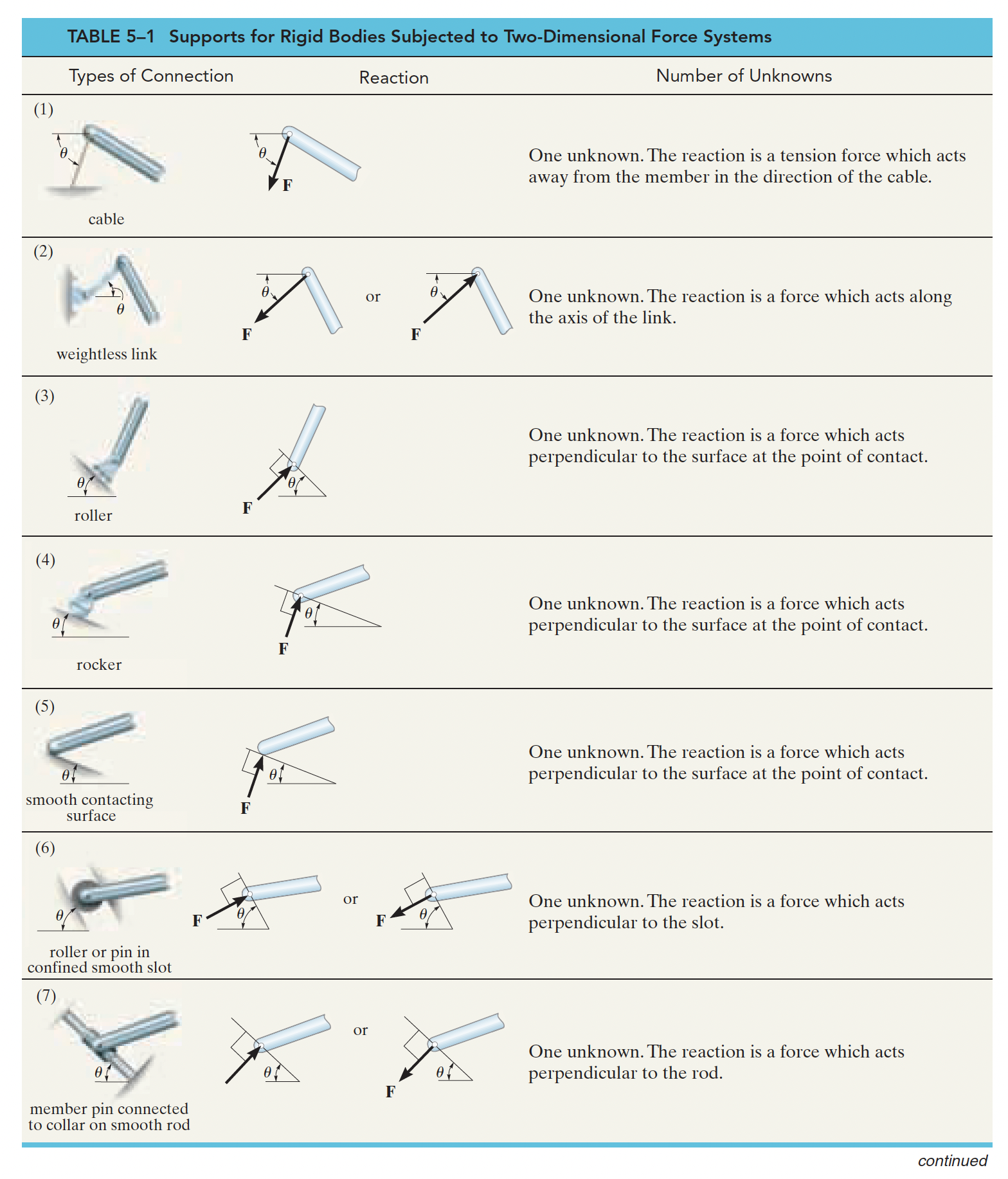
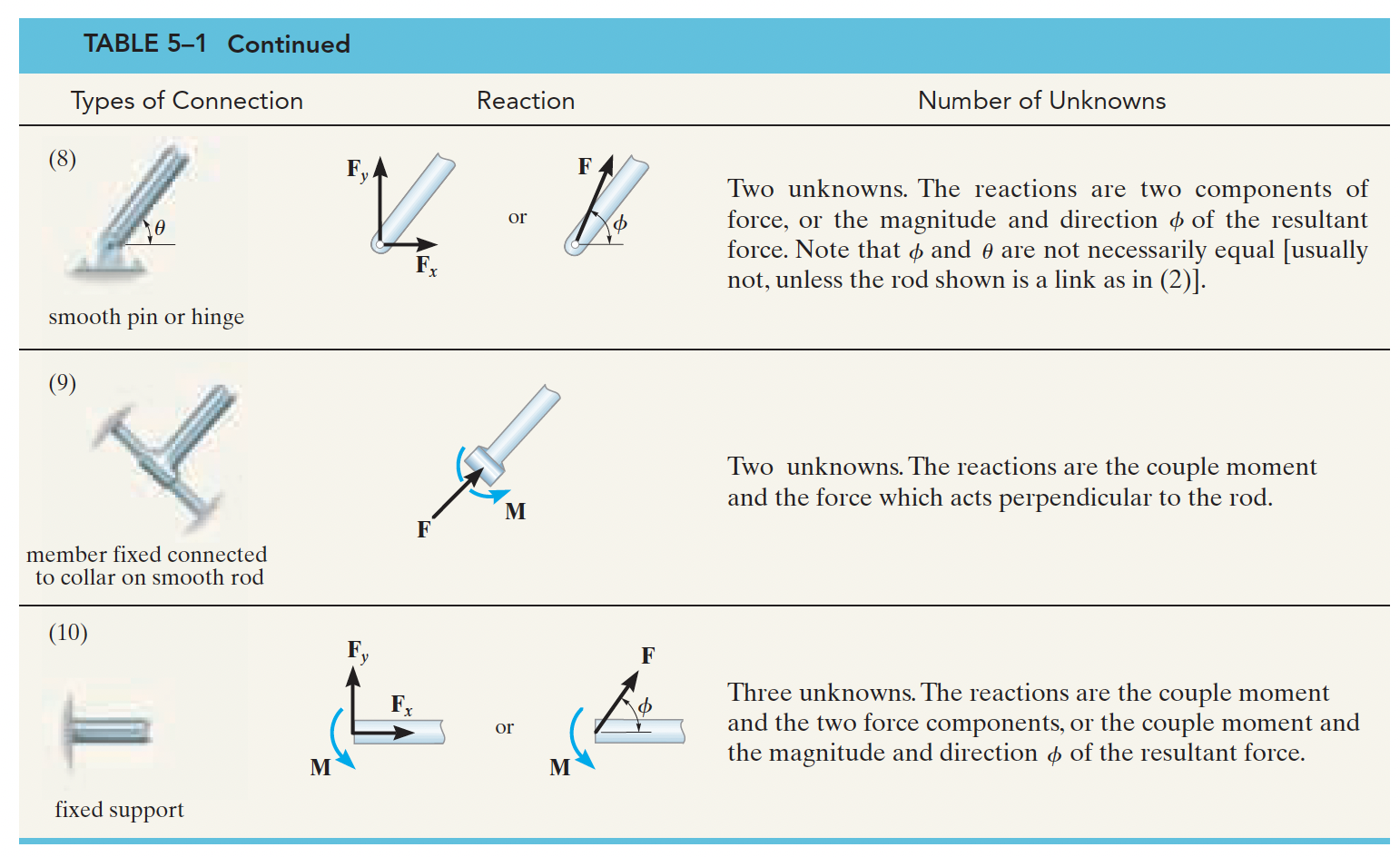
Question: What is the general rule which encompasses all the cases in the above table and more?
Whenever translation in a certain direction is constrained, a constraint force in that direction enforces the constraint. Whenever rotation along a certain axis is constrained, a constraint moment along the same axis results.
Good notation is important: in print, vectors are usually denoted by boldface, e.g. \({\bf v}\) or \({\bf F}\). In writing, vectors are either denoted by an overhead arrow, e.g. \(\vec{v}\), or by a line or squiggle underneath, e.g. \(\underline{v}\). We opt for the latter notation since we reserve the top of a vector for other accents.
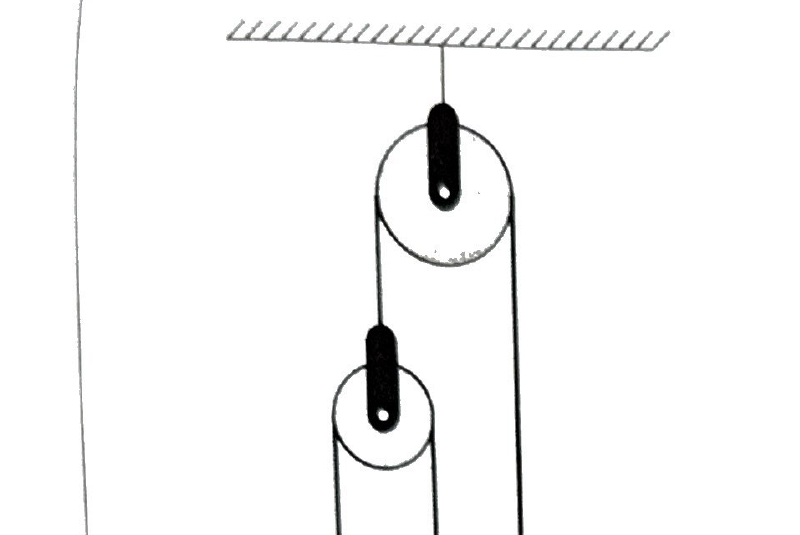
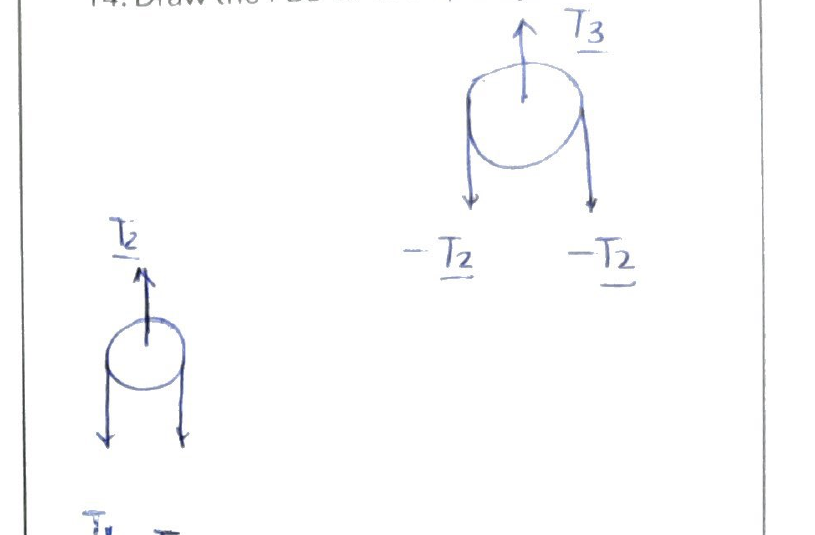
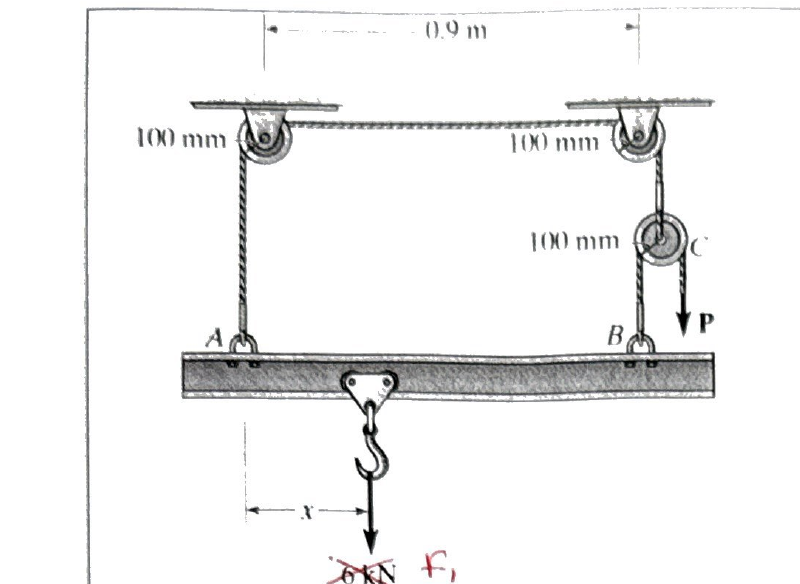
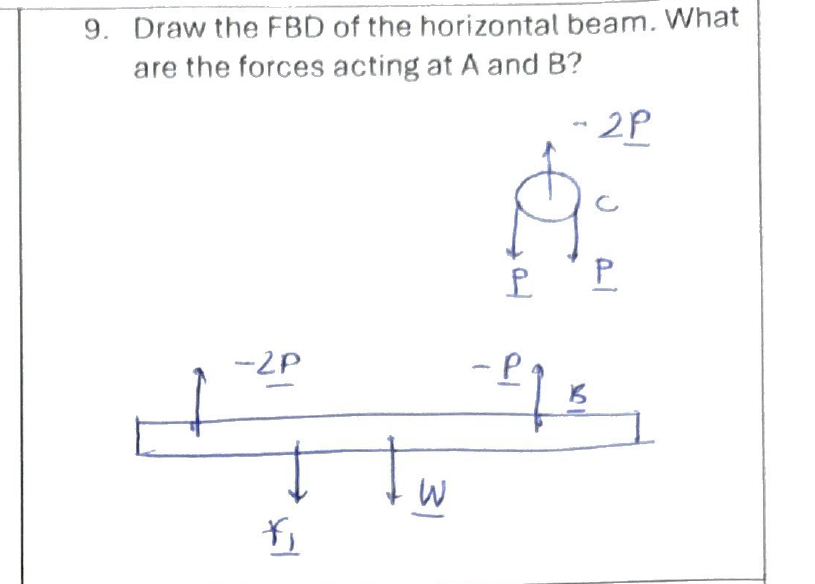
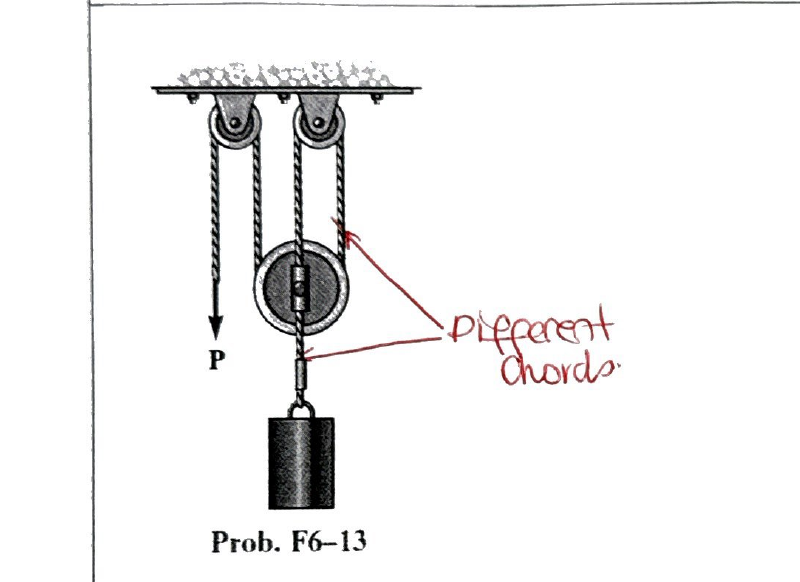
For a massless inextensible string, the tension is the same at all points along the string.
For a frictionless massless pulley, the tension in the string on either side of the pulley is the same.
3.1 Exercises
The following problems are from Set 00 – Free Body Diagrams. Gravity acts vertically down; all problems are set up in the vertical plane.
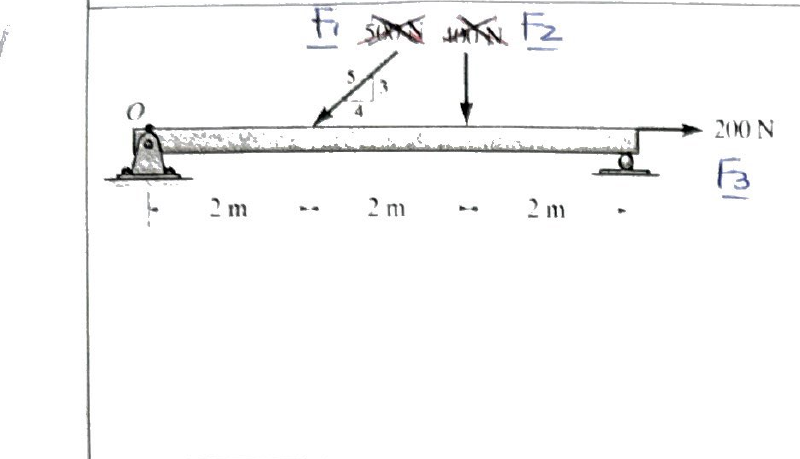
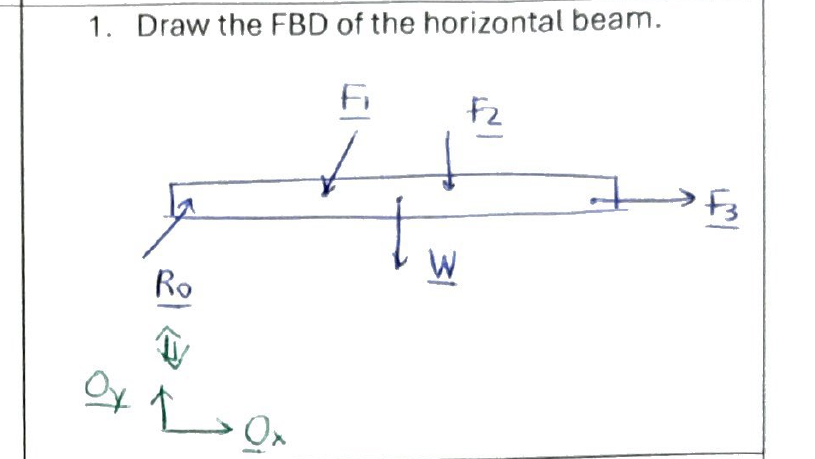
1. Draw the FBD of the horizontal beam.
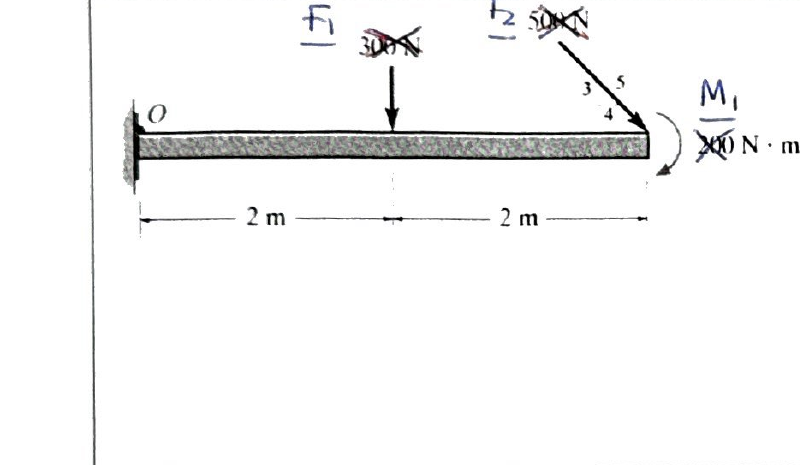
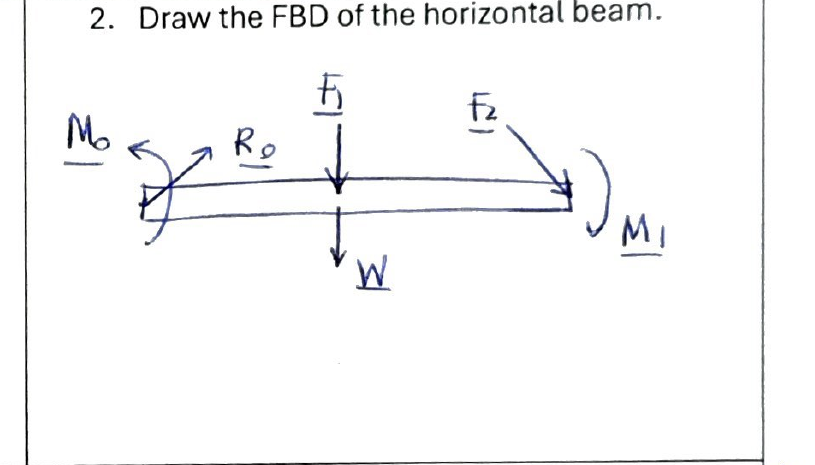
2. Draw the FBD of the horizontal beam.
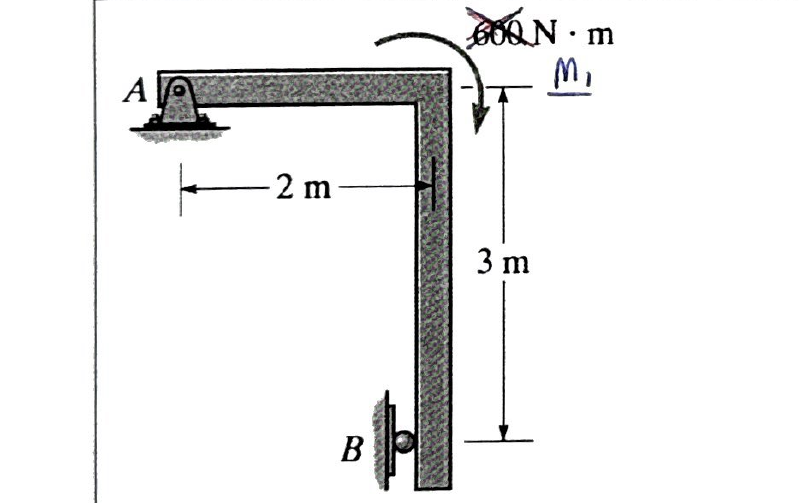
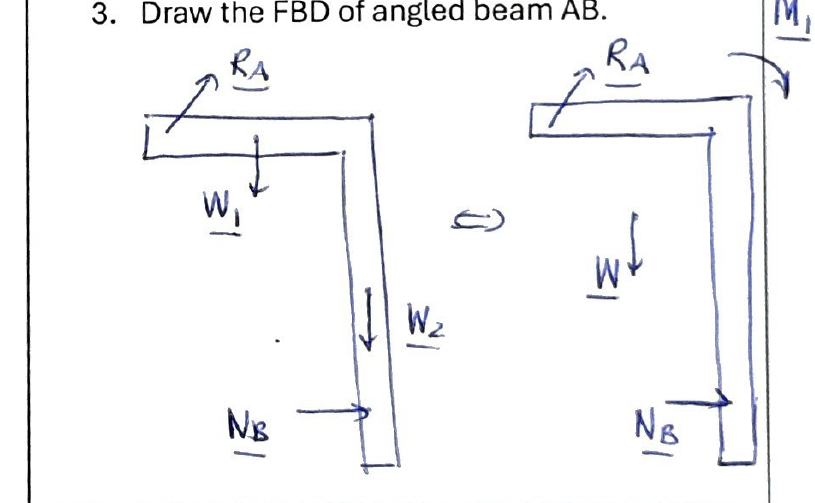
3. Draw the FBD of angled beam \(AB\).
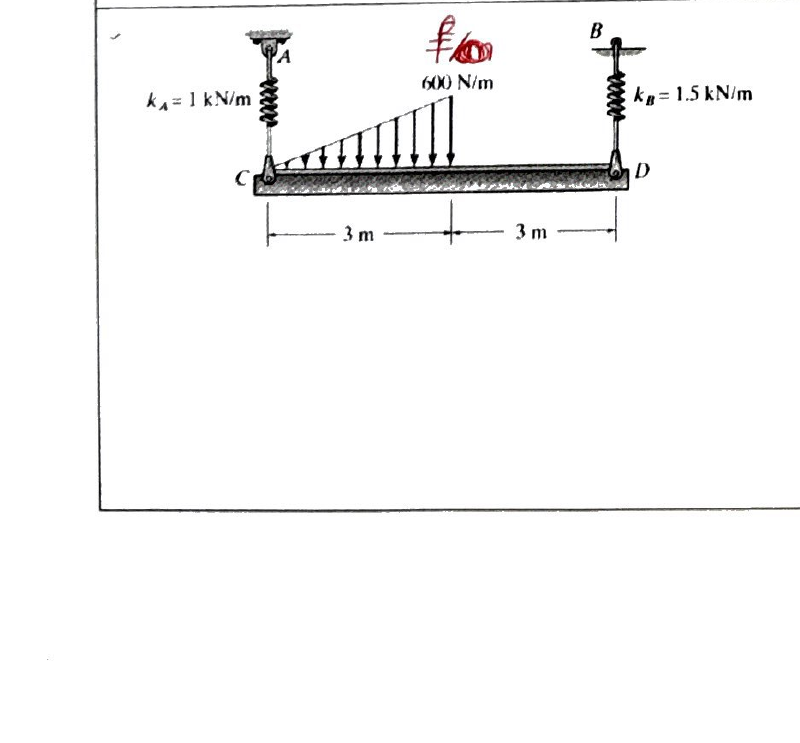
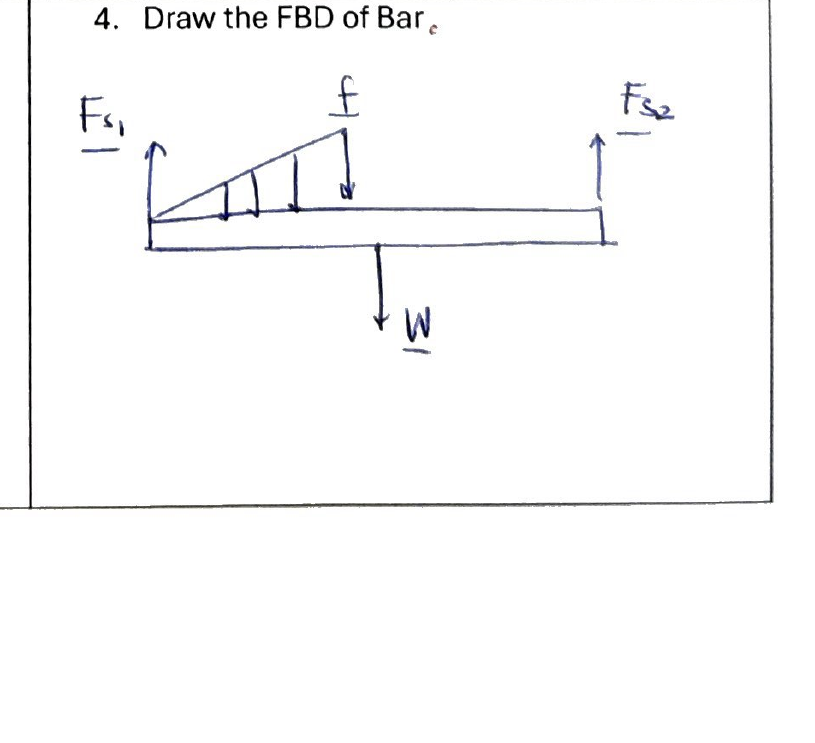
4. Draw the FBD of the bar.
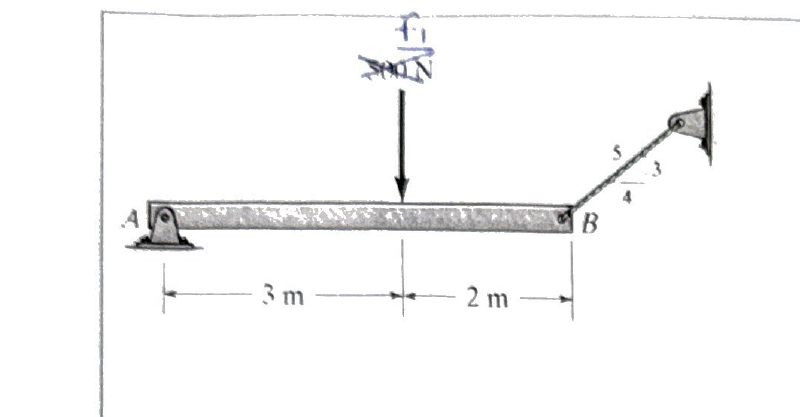
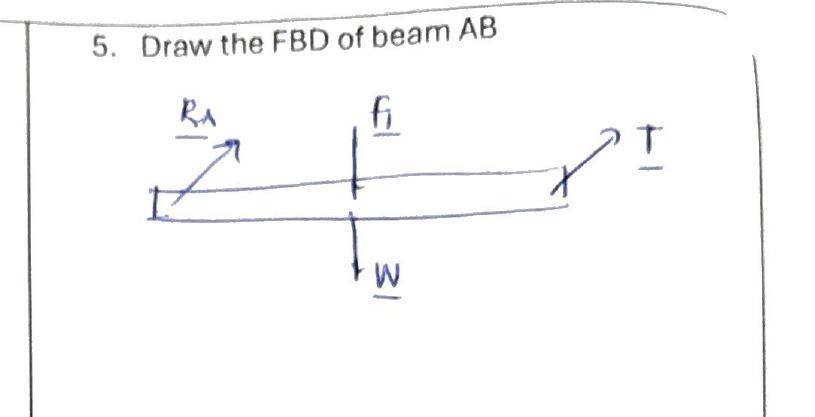
5. Draw the FBD of beam \(AB\).
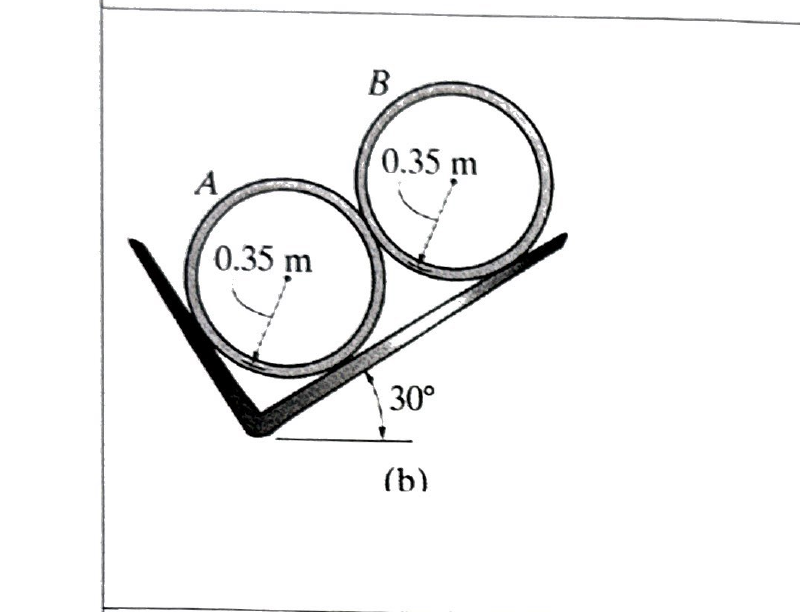
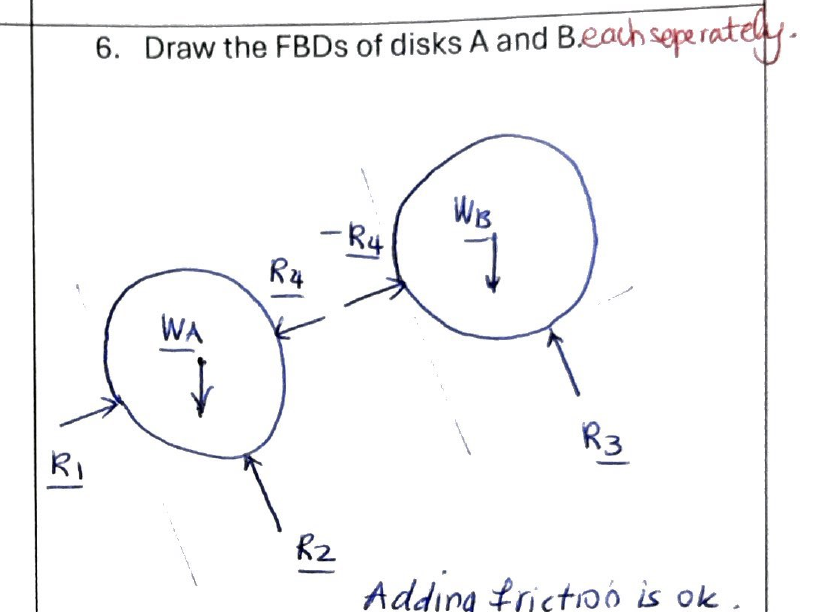
6. Draw the FBDs of disks \(A\) and \(B\) each separately.
7. Draw the FBD of the bar.
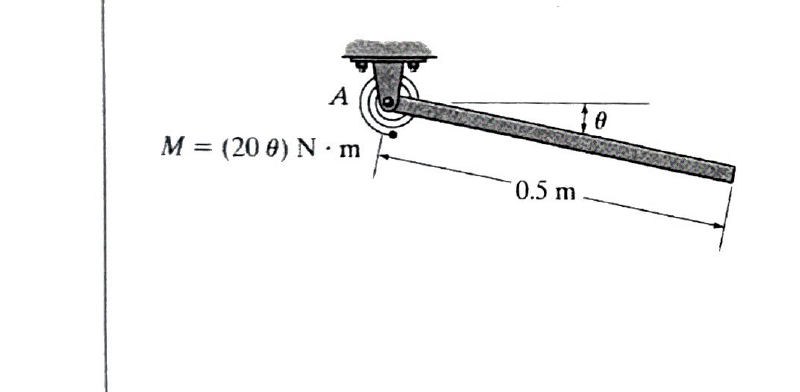
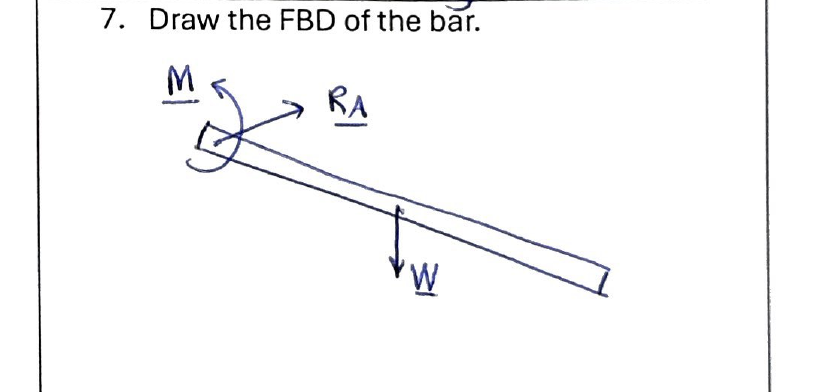
8. Draw the FBD of bar \(AB\).
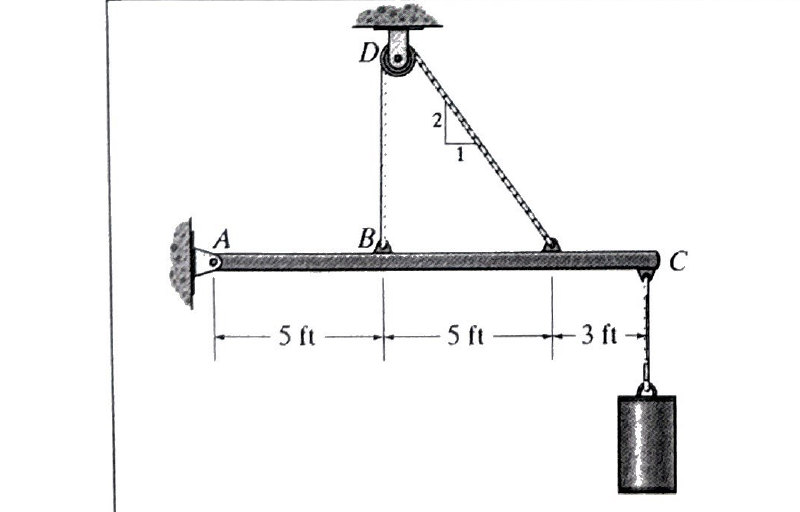
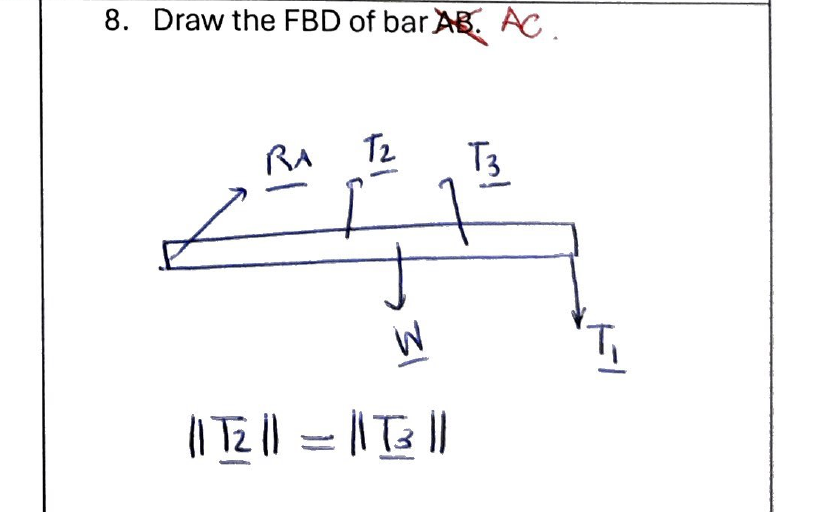
9. Draw the FBD of the horizontal beam. What are the forces acting at \(A\) and \(B\)?
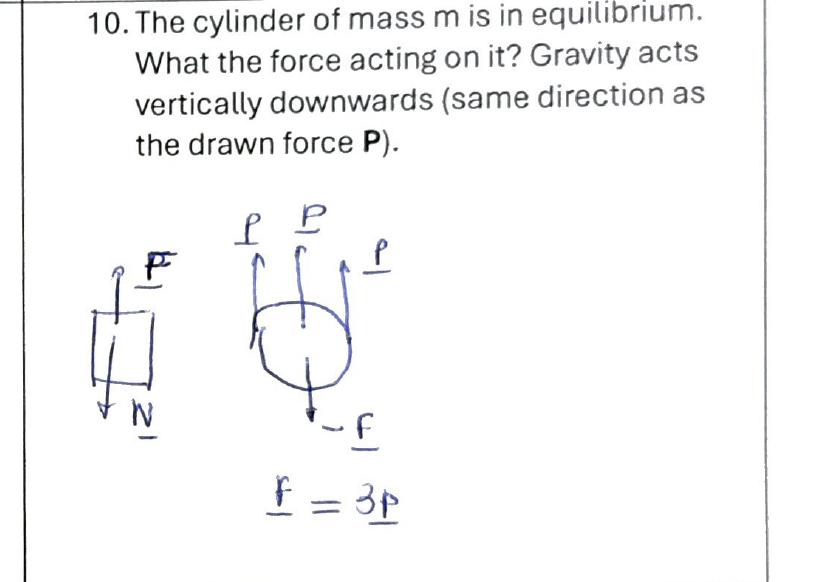
10. The cylinder of mass \(m\) is in equilibrium. What forces act on it? Gravity acts vertically downwards (same direction as the drawn force \(\mathbf{P}\)).
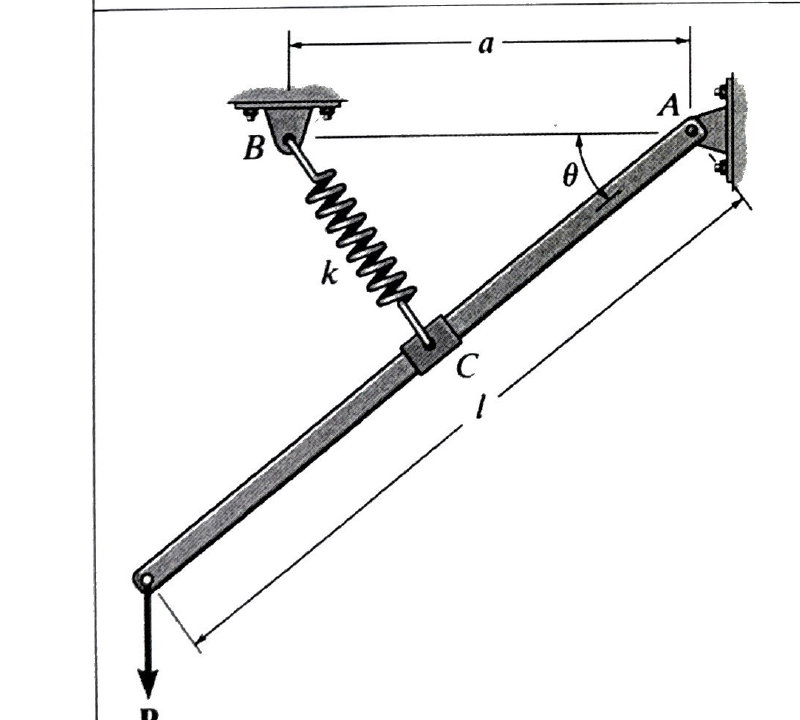
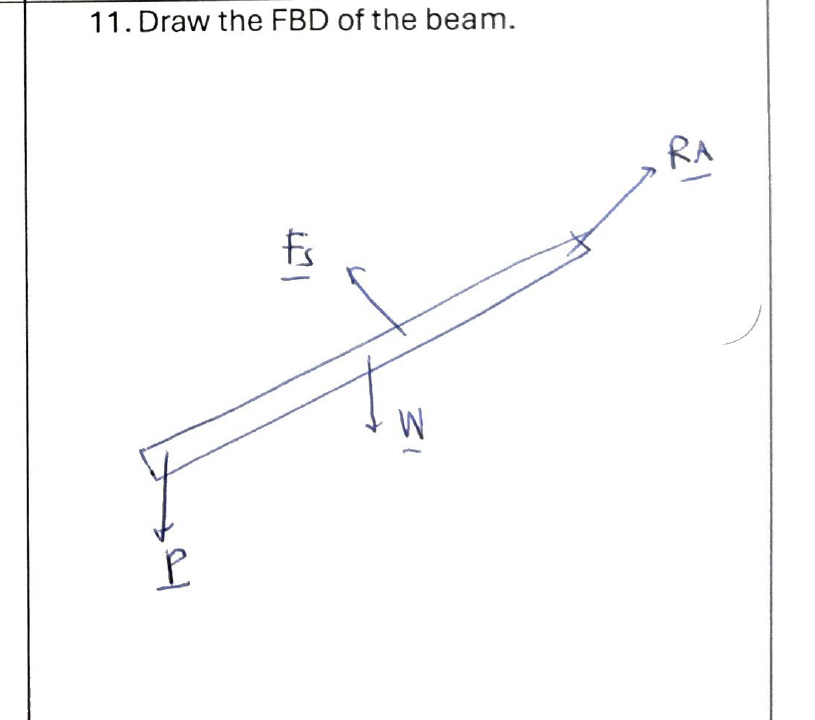
11. Draw the FBD of the beam.
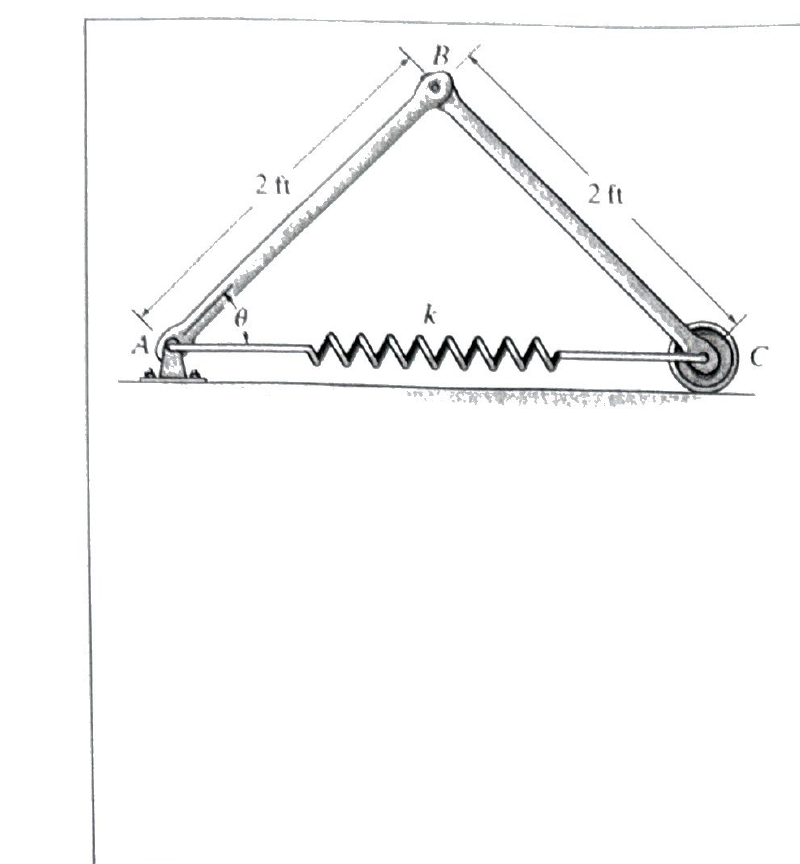
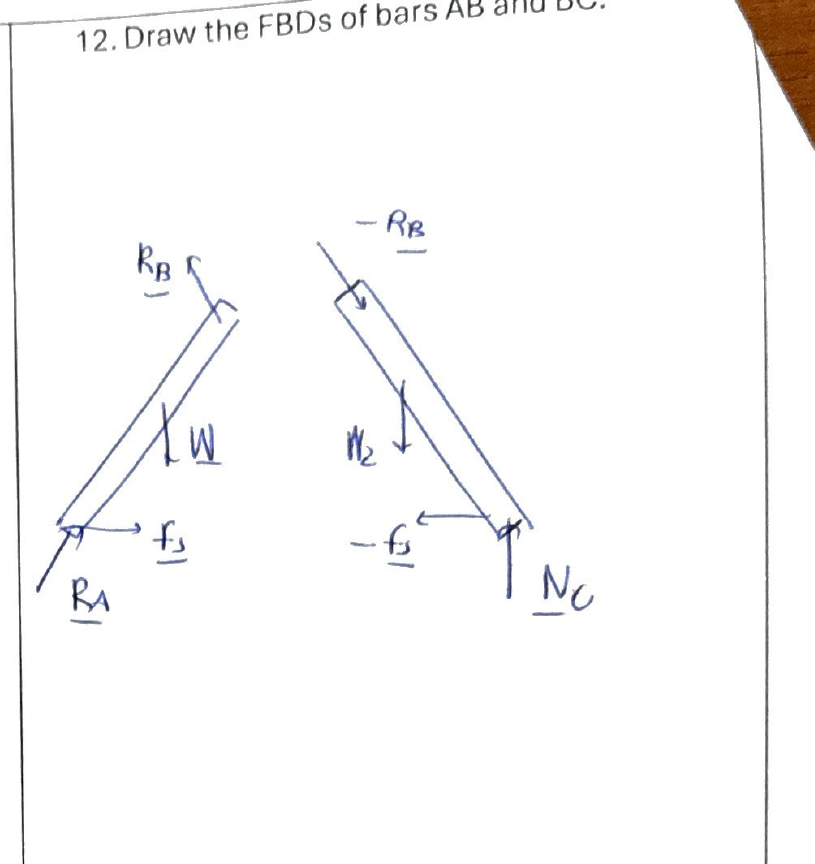
12. Draw the FBDs of bars \(AB\) and \(BC\).
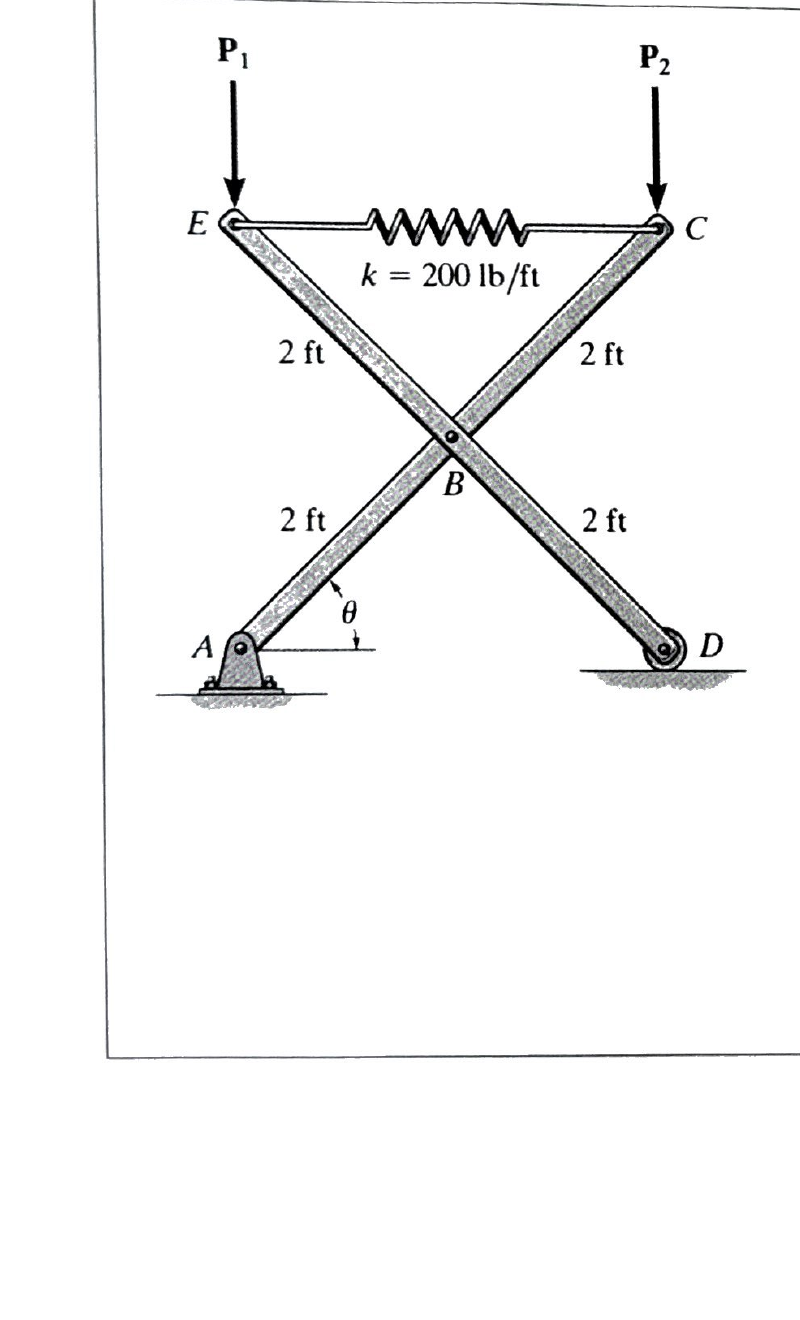
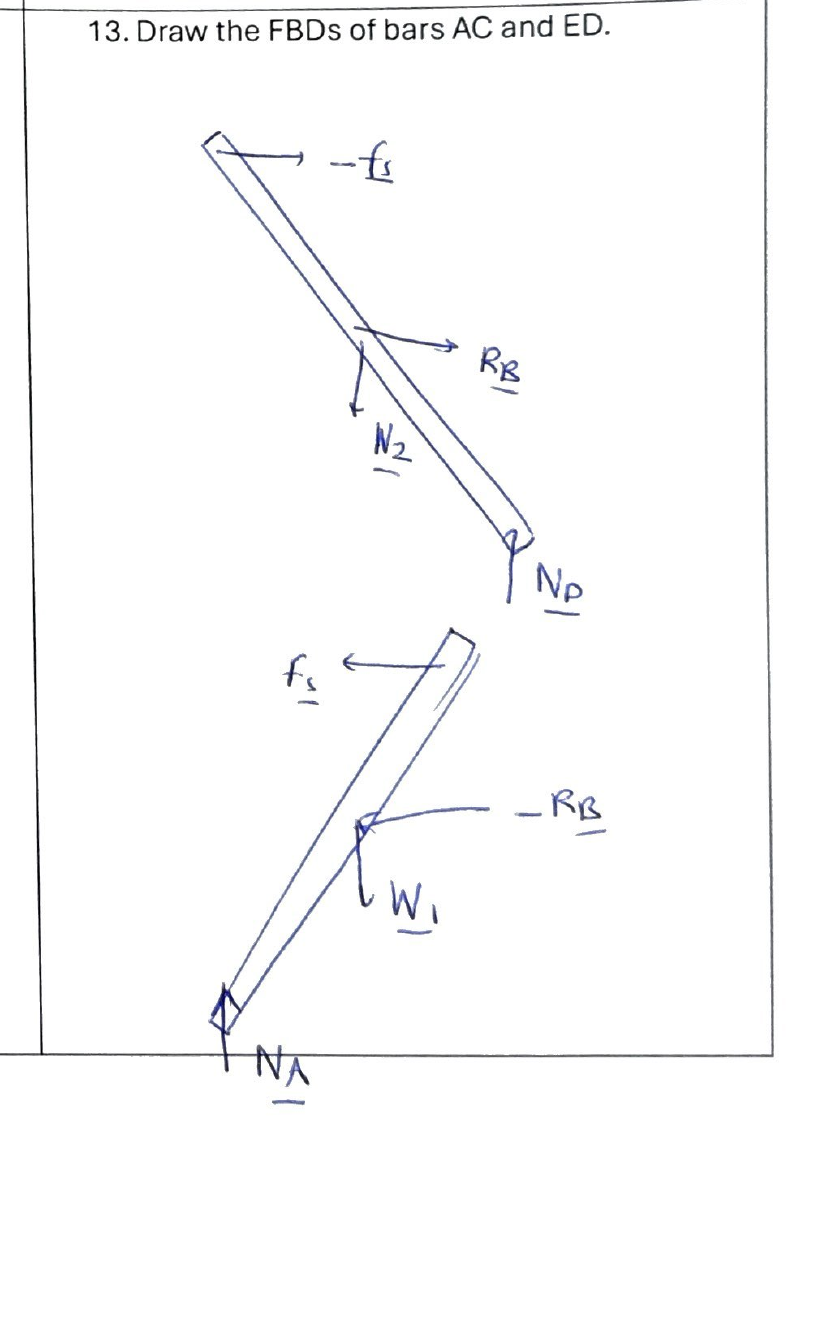
13. Draw the FBDs of bars \(AC\) and \(ED\).
14. Draw the FBD of each pulley.